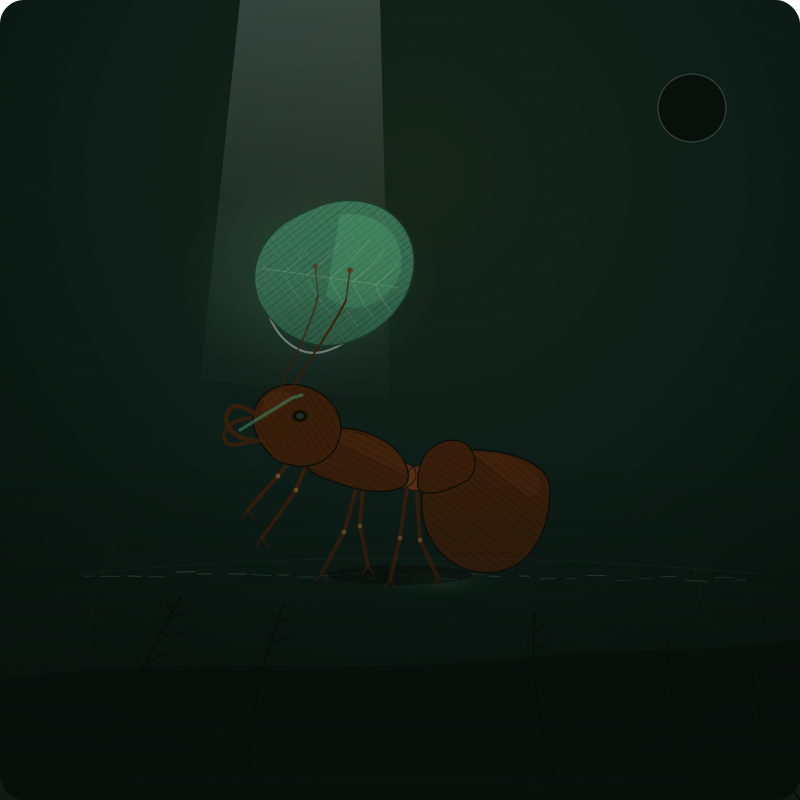
Meet the Leafcutter Ant
The most productive animal in its forest, and the last one who eats from its own garden.
In the tropical forests of Central and South America, leafcutter ants maintain underground colonies of up to eight million workers, farming a fungus that no member of the colony has ever eaten directly.
Every symbolic claim in this reading rests on these verified behaviors: the chemical testing of leaves before cutting, the division of the colony into distinct operational chambers, the precise pheromone communication that coordinates millions of individuals, and the long-haul load-carrying that feeds the whole system from the outside in.
The colony runs on precision. So do you.
6 traits below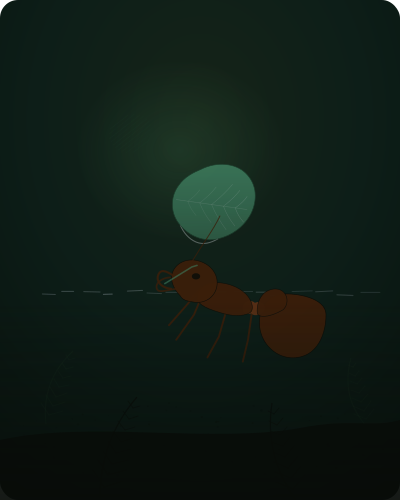
01of six
Fungus farming
Leafcutter ants do not eat the leaves they cut. They carry leaf fragments underground to cultivate Leucoagaricus gongylophorus, a fungus that breaks the plant material into a nutritious food the colony can actually digest. The relationship is obligate: neither the ant nor the fungus survives without the other.
You build systems that feed others long before they feed you. The garden is the product, not the cutting. What you produce is often invisible to the people it sustains.
02of six
Leaf testing
Before cutting, a leafcutter worker presses its forelegs against the leaf surface. Chemical receptors on the antennae sample for secondary plant compounds that would inhibit or kill the fungus garden. A leaf that fails the test is abandoned; the ant moves to the next one.
You check before you commit, every time. This is not hesitation — it is the test that keeps the garden alive. The delay before your yes is the reason your yes is worth something.
03of six
Foraging columns
Leafcutter foraging trails can extend more than 200 meters from the nest entrance. Workers maintain the trail by depositing pheromone signals that others follow, cutting vegetation from a rotating set of trees to prevent over-harvesting any single source.
You think in systems across time, not in single transactions. The trail is not the destination — it is the method. You plan the route before you take the first step.
04of six
Load-carrying
Individual leafcutter workers carry fragments weighing up to 50 times their own body weight. Larger workers (media workers) do most of the cutting and carrying; smaller workers tend the fungus garden underground.
You carry loads that other people do not register as extraordinary until they try to lift them. The weight is not the story; getting it to the garden is. You measure your capacity by what the system needs, not what is comfortable.
05of six
Minim hitchhikers
Tiny ants called minims ride on top of large leaf fragments during transport. They are not passengers — they defend the carrier against parasitic phorid flies that attempt to lay eggs on the larger workers while their mandibles are occupied.
You benefit from close-in support you did not think to ask for. The system works because others defend the process while you carry the load. This is worth acknowledging.
06of six
Waste chambers
Leafcutter colonies maintain dedicated waste chambers positioned away from the fungus garden, often vented to the outside. Workers who handle waste are separated from garden tenders until they have groomed themselves. Contaminated material is removed within hours.
You protect the garden by routing failure away from it. The same rigor that keeps the fungus alive keeps your best work clean. What you quarantine is as deliberate as what you cultivate.