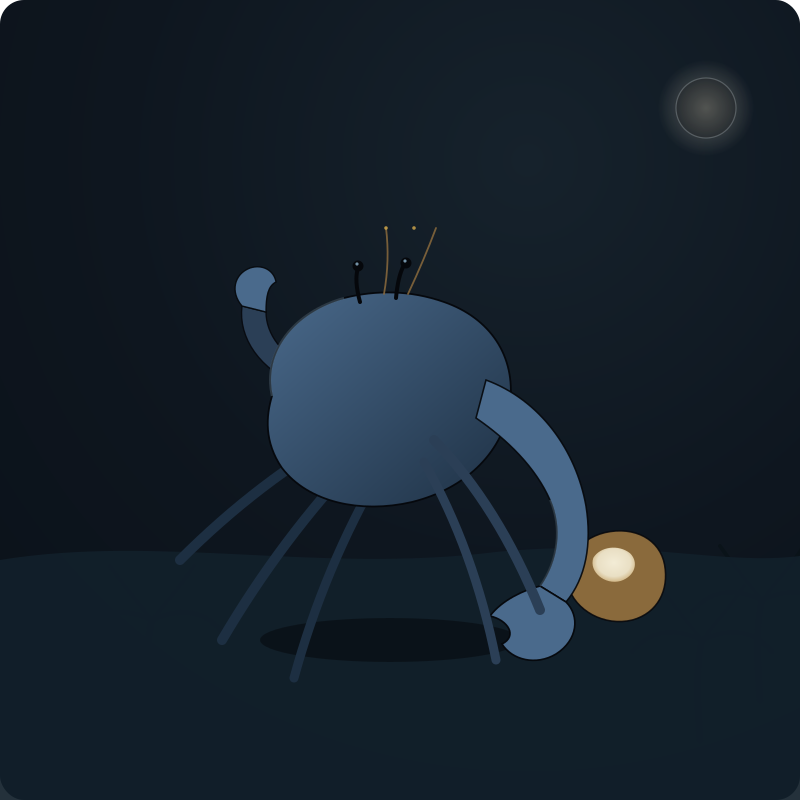
Meet the Coconut Crab
A body that outgrew its borrowed shell, and built one no one else can enter
The largest land arthropod alive, armored and slow-growing, dug into a burrow on a tropical island it will defend for decades.
Everything this reading says about you is grounded in what the Coconut Crab actually is: a creature that abandons its first borrowed home for a hardened body of its own, forages by scent across real distance, and grips harder than almost anything else on land. This chapter is that foundation. The rest of the page draws its meaning from these real traits.
The shell was never the weakness. What you built to replace it is.
6 traits below
01of six
The abandoned shell
As a juvenile the crab lives like any hermit crab, carrying a salvaged gastropod shell for protection. At two to three years old, still under two centimetres long, it abandons the shell for good and hardens its own abdomen into permanent armor.
The same trade happened early for you: a shape that almost fit got left behind for one built entirely on your own terms. There is no borrowed version to trade up from anymore, only the one you built and still maintain yourself.
02of six
The claw
The coconut crab's claw delivers the strongest pinch ever measured in a crustacean, recorded up to 1,765 newtons and projected past 3,300 newtons in the largest individuals, enough to crack the hard-shelled fruit that gives the species its name.
Getting the hard thing open tends to fall to you. Where other people back off a resistant problem, you apply steady, disproportionate force until it gives.
03of six
The lung that cannot go home
Adults breathe through a branchiostegal lung, a gill-and-lung hybrid that pulls oxygen from air rather than water, and they drown if kept submerged for more than about an hour.
A life built on land, for you, is not reversible either. Once a place is made fully yours, there is no quietly going back to the water you came from.
04of six
The antennae
The crab's antennae carry insect-like sensory structures called aesthetes, giving it airborne smell sensitive enough to detect fruit or carrion from a real distance, unusual among crustaceans built to smell only in water.
What is useful gets read before you have arrived at it. The nose for opportunity that keeps your shelter stocked is not luck; it is a sense that works the room before you enter it.
05of six
The sixty-year climb
Growth is slow, and the crab does not reach its full size until forty to sixty years old, one of the longest maturation periods of any invertebrate.
Your strength was not handed to you. It was built in decades of quiet accumulation, the kind that looks, from a distance, like simply staying put and getting stronger.
06of six
The one trip back to the sea
Adults live entirely on land, but females return to the shoreline to release their eggs into the surf, and the hatched larvae drift in the open ocean for about a month before coming back to shore for good.
You will leave the shelter you built when what you are provisioning for requires it, then close the door behind you and go back to building. The trip out is in service of the home, not an escape from it.