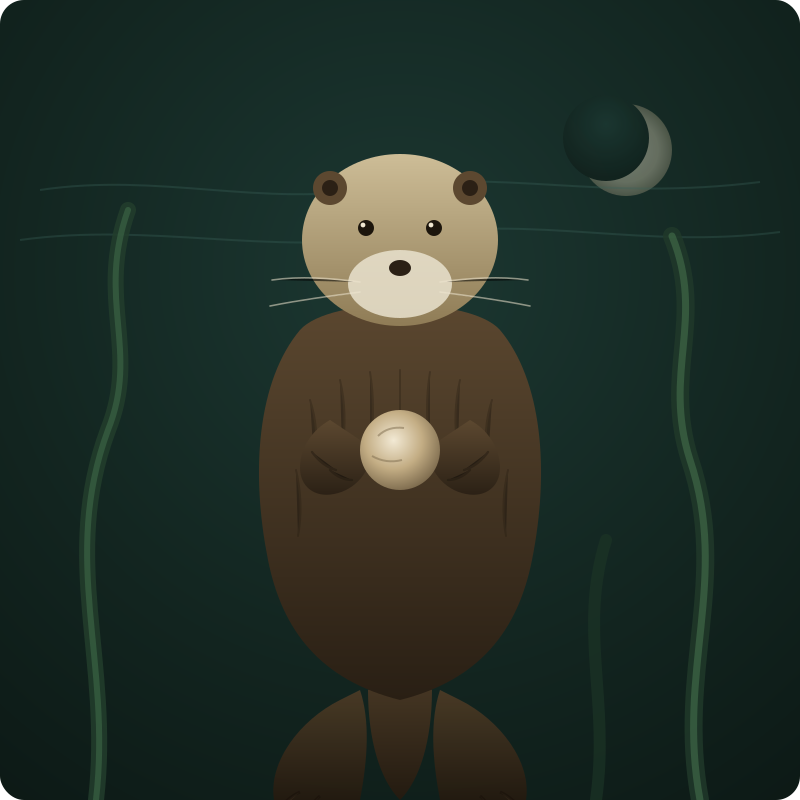
Meet the Sea Otter
A creature that cannot survive the water alone, and the last one to admit it needs a raft.
A marine mammal of the North Pacific coast, floating on its back in the kelp with a favorite rock held against its chest.
Everything this reading says about you is grounded in what the Sea Otter actually is: a mammal with no blubber that survives cold water on fur and devotion alone, a tool-user that keeps one rock for years, a parent that wraps its young in kelp rather than risk losing them to the current. This chapter is that foundation. The rest of the page draws its meaning from these real traits.
The affection was never the problem. The grip is.
6 traits below
01of six
The raft
Sea otters rest together in single-sex groups called rafts, and animals resting side by side will link paws or wrap themselves in strands of kelp so the group does not drift apart while asleep.
Your first instinct at rest is not solitude. It is a hand, a strand, anything that keeps the people you love within reach while you are not watching.
02of six
The kept rock
Many sea otters keep a single favorite rock in a loose pouch of skin under one forearm, carrying it between dives and reusing it for years as a hammer or anvil to open shellfish.
You do not discard what has already proven itself. You keep the one tool, the one person, the one place that already works, and you carry it everywhere the day takes you.
03of six
No blubber
Unlike other marine mammals, the sea otter carries no insulating layer of blubber, relying instead on the densest fur of any mammal, close to a million hairs per square inch, and a fast metabolism to survive cold Pacific water.
Your warmth is not stored fat, held in reserve for when it is needed. It is active and constant, a maintenance you cannot skip without paying for it in cold.
04of six
The grooming
A sea otter spends several hours a day grooming, working air into every layer of its coat; fur that goes unclean mats and loses its insulating air, and a badly fouled coat can be fatal.
Tending is not an indulgence for you. It is the difference between staying warm and going under, and you have never quite stopped treating care that way, for yourself and for everyone you hold.
05of six
The wrapped pup
A newborn pup's coat traps so much air that it cannot yet dive or sink; a foraging mother will wrap her pup in kelp fronds to keep it from drifting off while she is underwater.
The first thing your kind does for its young is make sure they cannot float away unattended. It is the oldest instinct you carry, and it was never really about the kelp. It is about not losing sight of the ones who cannot yet hold on themselves.
06of six
Keystone of the forest
Eating roughly a quarter of its body weight daily, much of it sea urchins, a healthy sea otter population keeps urchin numbers low enough for kelp forests to grow; remove the otters and unchecked urchins can reduce a forest to bare rock within years.
The whole ecosystem around you depends on you staying attached and staying fed. You are not exaggerating when you feel like the thing holding a fragile system together. In your case, you might actually be right.