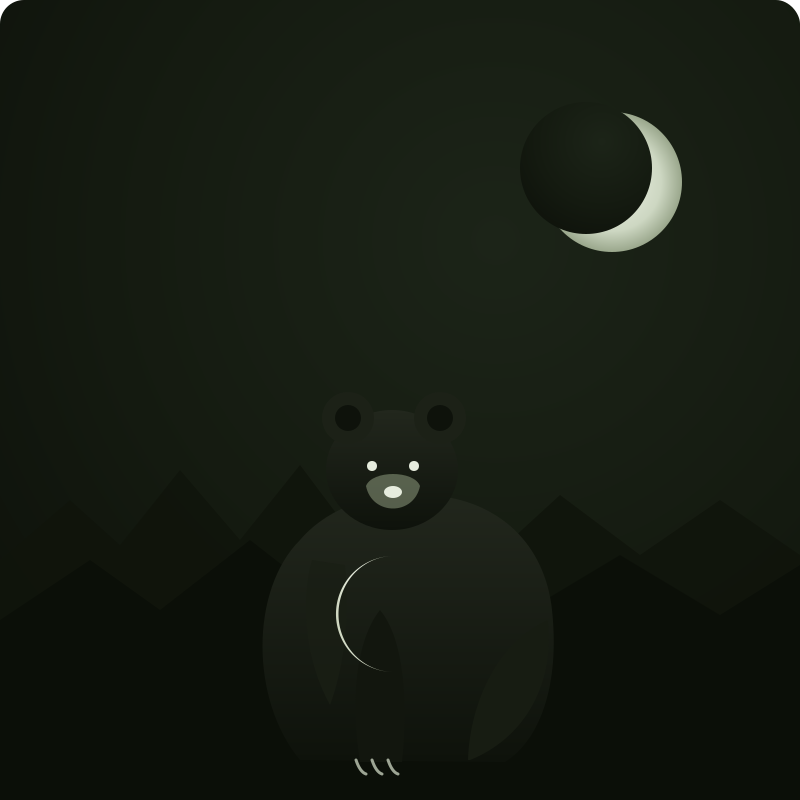
Meet the Moon Bear
A soft mark of light, carried on a body built to be feared
A bear of Asia's forested mountains, black-furred and heavy-shouldered, carrying a pale crescent on its chest where the dark is deepest.
Everything this reading says about you is grounded in what the Moon Bear actually is: a bright mark worn on a fearsome body, a climber that builds its shelter in the canopy and withdraws upward when threatened, a listener that reads danger by sound. This chapter is that foundation. The rest of the page draws its meaning from these real traits.
The mark was never the problem. The height you keep it at is.
6 traits below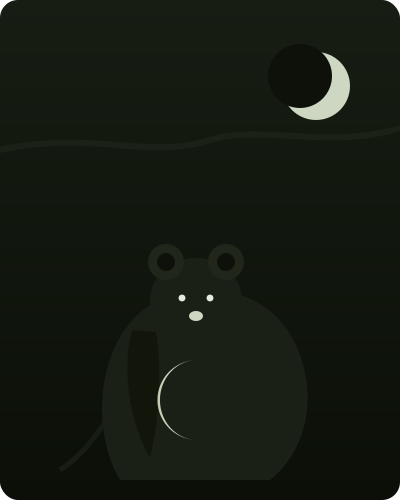
01of six
The crescent
A pale cream or yellow-white patch, often shaped like a crescent or V, sits on the chest against otherwise black fur. It is the source of the common name, the moon bear, and the marking varies from bear to bear.
You carry a visible sign of something gentle, right over the heart, and it cannot be hidden. People read it on sight and decide you are softer than the rest of you looks.
02of six
The listening ears
The ears are large in proportion to the head, set wide and rounded, larger relative to the skull than in most other bears. They sit forward on a broad face built to take in sound.
You hear the shift before it arrives. You have usually measured the safety of a room by the time others are still settling into it.
03of six
The nest in the canopy
A skilled climber, the Moon Bear bends and breaks branches into raised day-nests where it feeds and rests, and it retreats up into the trees when it senses a threat.
Your instinct under pressure is not to fight for the ground. It is to build a high, private place and go up, out of reach, until the threat passes.
04of six
The mane
A ruff of long hair, sometimes 15 centimetres, frames the neck and shoulders in much of the range. When the bear stands and faces a threat, the mane makes it read as larger than it is.
When cornered, you get bigger, not smaller. The guard you throw up is real, and it is worn around the softest part of you, the neck and the chest.
05of six
The winter den
In the colder north of the range the Moon Bear dens through winter, holing up in a hollow tree or cave for months before emerging in spring.
You honour a season of withdrawal. You need the months in the dark, and you come back different when the ground has thawed.
06of six
The curved claws
Strong, curved claws up to five centimetres, powered by a heavy upper body, are built for gripping bark and tearing into logs more than for running prey down.
Your strength is made for holding on and for reaching what is sealed, not for the chase. Once you grip something worth keeping, you do not easily let it go.