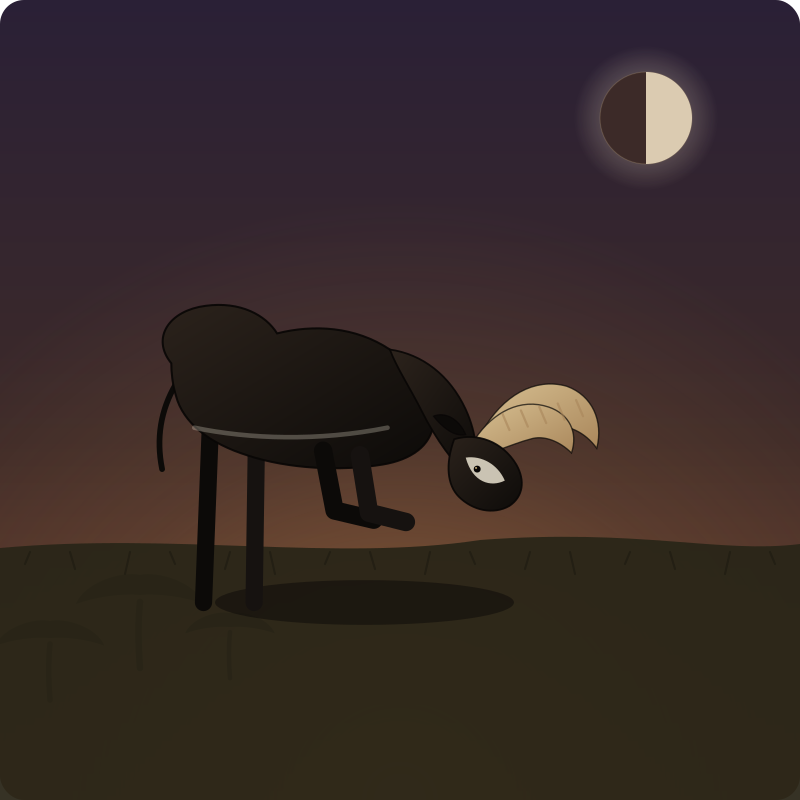
Meet the Sable Antelope
An antelope built like the animals that run, known instead for the ones that stayed and fought.
A large, dark-coated antelope of southern and East African woodland-grassland, armed on both sexes with long, ridged horns and known for facing predators down rather than outrunning them.
Everything this reading says about you is grounded in what the Sable Antelope actually is: an animal built with the same defenses on both sexes, that meets a real threat by dropping low and turning its horns into a wall rather than turning its back. This chapter is that foundation. The rest of the page draws its meaning from these real traits.
The horns were never the whole story. The decision to use the ground instead of your legs is.
6 traits below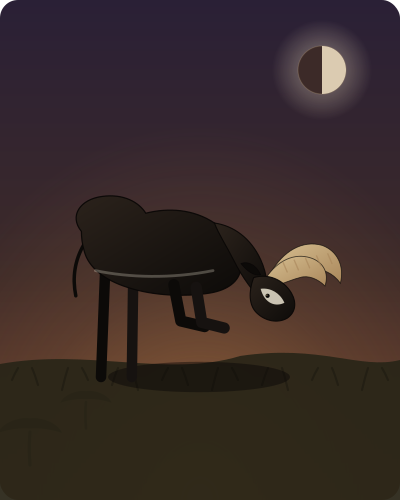
01of six
The horns both sexes carry
Both male and female sable antelope grow long, ridged horns sweeping back in a strong arc; most antelope species reserve horns for males alone, but the sable arms both sexes. A mature bull's horns run 130 to 165 centimetres; a cow's, 60 to 100.
Whatever protects you was never issued as a smaller, softer version made just for you. You carry the real weapon, not a courtesy copy of someone else's.
02of six
The drop to the knees
When a serious threat closes the distance, a sable antelope drops onto its carpal joints, its functional 'knees', and sweeps its horns low and sideways rather than staying upright and running; the same low, horns-forward posture appears in male dominance fights and in genuine predator defense.
Your instinct under real pressure is not to make yourself bigger or faster. It's to go low, get close to the ground, and turn the moment everyone expects you to fold into the moment you become hardest to move.
03of six
The stand a lion learns to skip
Adult sable antelope are large-bodied and formidably armed enough that lions rarely press an attack on a healthy adult, and there are documented cases of a cornered sable wounding or killing an attacking lion outright.
People tend to learn, without being told directly, that testing you costs more than it's worth. You've never had to announce that yourself. The stand is the announcement.
04of six
The coat that tells the truth about age
Sable calves and young adults of both sexes share a similar chestnut-brown coat; only around three years old do males darken into a glossy black set off by bold white face and belly markings, while females, outside the southernmost populations, stay chestnut for life.
What you've survived eventually shows on you, whether or not you ever narrate it. The years you've held ground are visible before you say a word about them.
05of six
The hierarchy that outranks the horn
Sable herds of roughly 15 to 25 females and young keep a rank order maintained mostly through small, low-intensity displays; the single territorial bull defends the herd's ground, but does not run the herd's actual order.
Standing guard and being in charge were never the same job to you, and you've never confused them. You can hold the line at the edge of a group without needing to decide what happens inside it.
06of six
The ground it actually chooses
Sable antelope favor a mix of open grassland and wooded cover rather than pure open plains, and avoid extensive open land where possible, grazing a narrow band of young grass and staying within roughly two miles of water.
You're particular about the ground you'll actually stand on. Open and exposed was never the same thing as safe, and you've always known the difference.