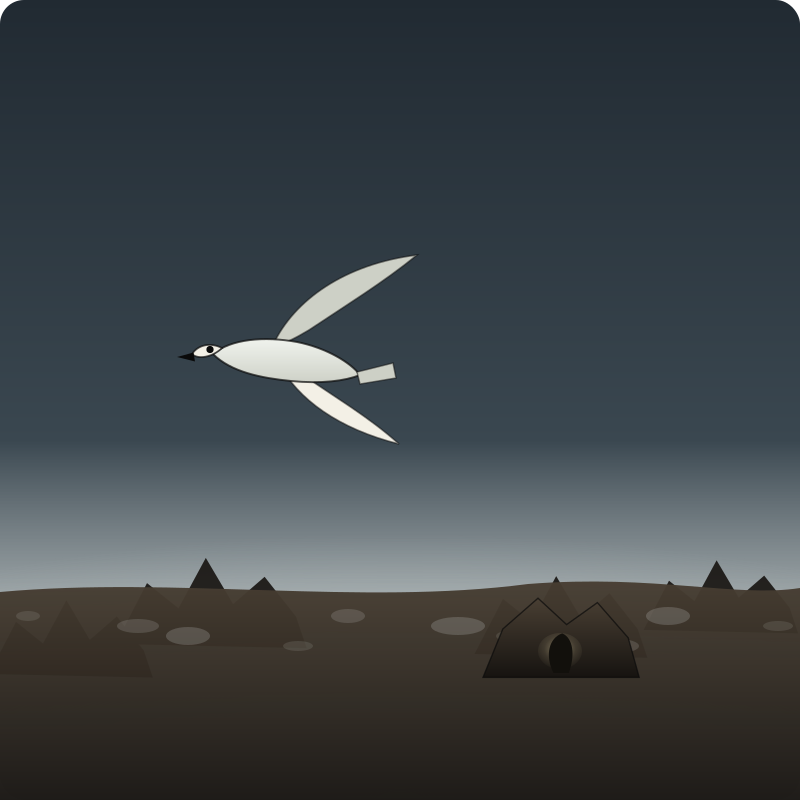
Meet the Snow Petrel
Nests farther from open water than any seabird needs to, and defends the crevice without ever striking a blow.
A pure white seabird of the Antarctic interior, one of only three bird species ever recorded at the geographic South Pole, nesting on bare rock hundreds of kilometers from the nearest open water.
Everything this reading says about you is grounded in what the Snow Petrel actually is: a bird that chooses the harshest, most interior ground on the continent to raise a single chick, defends that ground by repelling rather than fighting, and returns to the same crevice, the same mate, for decades. This chapter is that foundation. The rest of the page draws its meaning from these real traits.
The distance was never the hard part. Never getting to put it down again is.
6 traits below
01of six
The bare nunatak
Snow Petrels nest in colonies on ice-free rock outcrops called nunataks, laying a single egg in a sheltered crevice; the most extreme documented colonies sit more than 400 kilometers inland from the open sea, in the southern Prince Charles Mountains.
You will choose the hardest, most unreachable ground available if it is the ground that actually holds. Comfort was never the requirement; defensibility was.
02of six
The flight with nothing between
Adults nesting deep in the interior must cross bare ice with no open water or food source anywhere along the way to reach the sea and return with a meal for a single waiting chick.
You will close a genuinely long distance for the person waiting on you, and you rarely mention what the crossing actually cost you to make it look routine.
03of six
The spit that repels
Like other tubenosed seabirds, the Snow Petrel stores an energy-rich stomach oil in the proventriculus and can spray it forcefully from the mouth at a predator, usually a skua, matting its feathers rather than wounding it.
Your defense was never built to hurt anyone. It is built to make staying near you unpleasant enough that a threat leaves on its own.
04of six
The mate never traded
Snow Petrel pairs are commonly cited as faithful for life, a bond that can span two decades or more, with both birds returning to the same nest crevice season after season.
Once you have chosen who shares the ground with you, you do not go looking for a better crevice. You return to the one you already picked.
05of six
The crevice held for millennia
Radiocarbon dating of accumulated stomach-oil deposits shows that some Snow Petrel nest sites in Dronning Maud Land have been used continuously for tens of thousands of years, one generation returning to the last generation's exact crevice.
The ground you choose outlives the reasons you first chose it. You are drawn to a place that was already proven, long before you arrived.
06of six
The white that disappears
Almost entirely white plumage, broken only by a black bill and dark eyes, gives the Snow Petrel near-total camouflage against snow and ice, making it one of the purest-white birds recorded.
You can be genuinely hard to find in plain sight, present and accounted for, and still somehow the last thing anyone notices in the room.