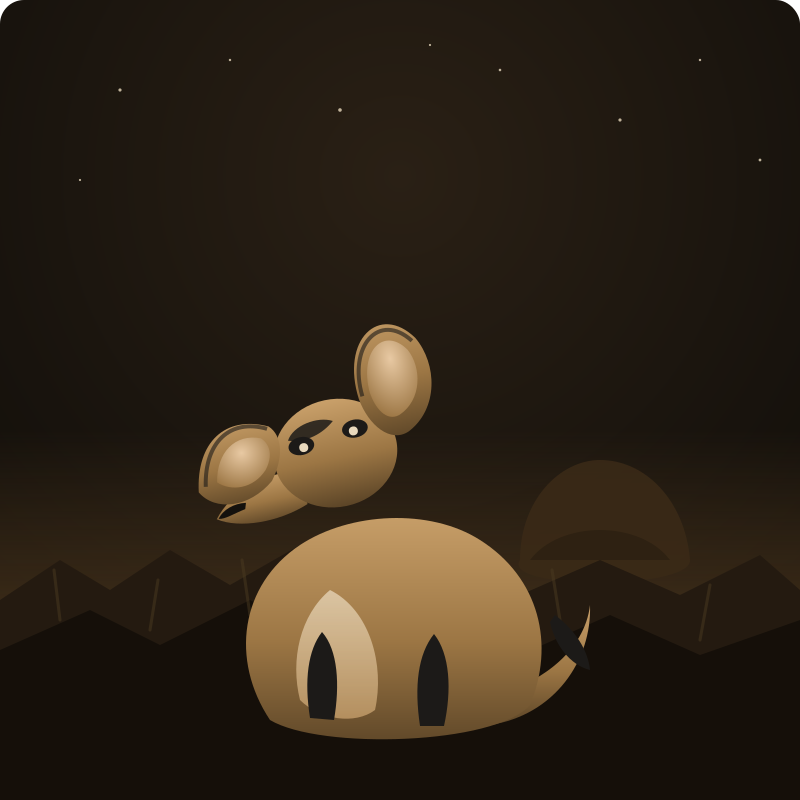
Meet the Bat-eared Fox
Ears built to hear the whole savanna, tuned mostly for two.
A small, silver-brown fox of Africa's open grasslands and savanna, marked out from every relative by a pair of ears that dwarf the rest of its face.
Everything this reading says about you rests on what the Bat-eared Fox actually is: an insect specialist whose oversized ears are tuned to sound moving underground, a nocturnal forager that lives as a bonded pair rather than alone, and a father who takes on more of the early parenting than almost any other wild dog. This chapter is that foundation. The rest of the page draws its meaning from these real traits.
The ears were never for show. They were always for the two or three who share the den.
6 traits below
01of six
The oversized ears
The ears reach roughly 11 to 13 centimetres long, among the largest relative to body size of any member of the dog family, and sensitive enough to register a beetle larva working its way out of a buried dung ball.
You catch what is moving under the surface of a conversation before anyone has said it out loud. Most people never learn how early you actually knew.
02of six
The turning ears
Each ear rotates independently to track a sound to its exact source, letting the fox aim its whole attention at one signal inside a field of noise.
You do not listen to a room in general. You turn toward one voice at a time, and everyone else fades a little while you do.
03of six
The insect specialist
Unlike any other member of the dog family, the Bat-eared Fox eats almost entirely insects: harvester termites and dung beetles can make up most of its diet, located by ear rather than by scent or sight.
You feed on the small, overlooked things other people step over without noticing. What looks like a narrow diet is actually a very specific kind of attention.
04of six
The mated pair
Bat-eared foxes are largely monogamous, sleeping in the same den, foraging together, and grooming each other along the ears and shoulders through the night.
Your closeness is not performed. It shows up as proximity kept up long after the introduction is over.
05of six
The dedicated father
Males often provide the greater share of early parental care, guarding, grooming, and playing with the kits, while the female spends more of her time foraging to keep her milk supply up.
Care, in your world, is not divided by who gave birth to it. It is divided by who has the time to give it fully.
06of six
The mound raid
When a family finds a termite mound, one fox breaks it open and the whole group feeds together on the insects that pour out before they can retreat underground.
You are capable of keeping a discovery to yourself. You more often call the people you trust to the opening before it closes.