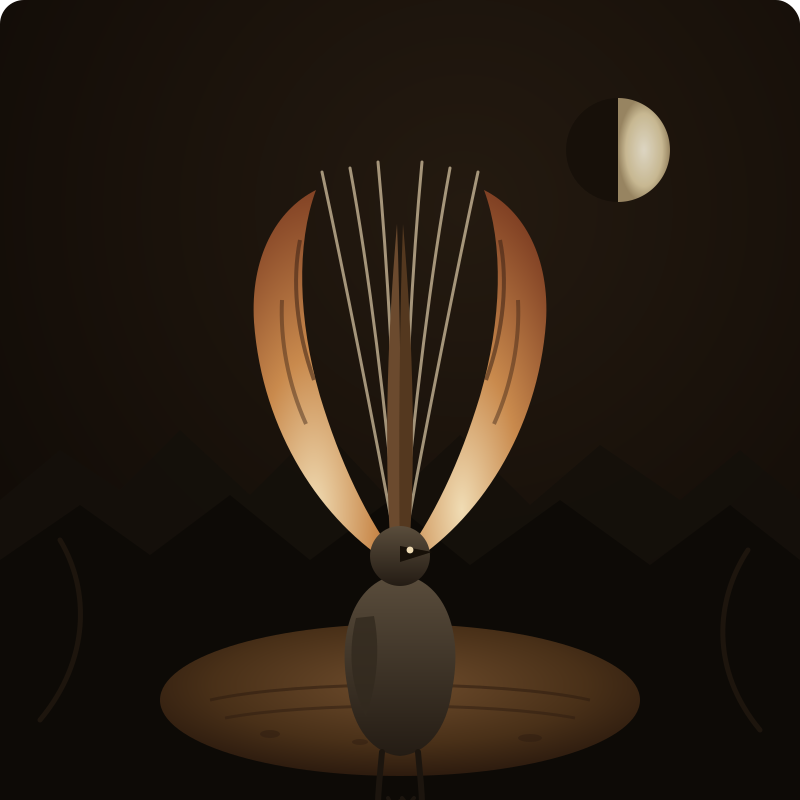
Meet the Superb Lyrebird
A voice built from everyone else's, still deciding which sound was there first.
A ground-dwelling songbird of Australia's wet, fern-thick forest gullies, carrying a lyre-shaped tail it raises rarely and a voice built largely from everyone else's.
Everything this reading says about you is grounded in what the Superb Lyrebird actually is: a bird that can imitate the calls of dozens of other species with enough precision to pass, a builder that rakes and re-rakes its own stage on the forest floor, and a ground-dweller so committed to solid footing it rarely uses the wings it has. This chapter is that foundation. The rest of the page draws its meaning from these real traits.
The mimicry was never the problem. Which note started as yours is.
6 traits below
01of six
The borrowed choir
A male superb lyrebird's song is built largely from mimicry, incorporating accurate imitations of the calls of dozens of other bird species into a single, sustained performance.
You can speak fluently in almost anyone's register on short notice. The quiet question underneath is which sound was ever actually yours to begin with.
02of six
The raked stage
Males build and maintain cleared, earthen display mounds on the forest floor, raking them free of litter and returning to the same handful of mounds within a territory for years.
Your instinct is to prepare the ground before you ever open your mouth. You would rather build the stage first than perform on uncertain footing.
03of six
The lyre raised
During courtship the male fans his long, patterned tail feathers up and forward over his entire body and head while singing, holding the display for long, uninterrupted stretches.
When you finally commit to being seen, you commit completely. There is no half-version of you on display once the performance actually starts.
04of six
The unwilling flier
Despite having fully formed wings, the superb lyrebird is largely ground-dwelling and rarely flies any real distance, typically only taking to the canopy to roost or to escape immediate danger.
You keep a capability in reserve rather than living by it. Leaving is always available and almost never your first choice.
05of six
The turned floor
Foraging by scratching through leaf litter with its feet, the species moves substantial volumes of litter and soil across a forest stand, functioning as a recognized ecosystem engineer of the eucalypt forest floor.
What looks like disruption, when you do it, is usually maintenance. You tend to leave ground better worked than you found it.
06of six
The unseen singer
Though its call carries clearly through a forest gully, the superb lyrebird itself is notoriously difficult to see, staying low in dense fern and litter and quick to fall silent or withdraw if it senses it is being watched.
People tend to know you by what they have heard about you long before they have actually seen you plainly. Being audible and being known are not the same thing for you.