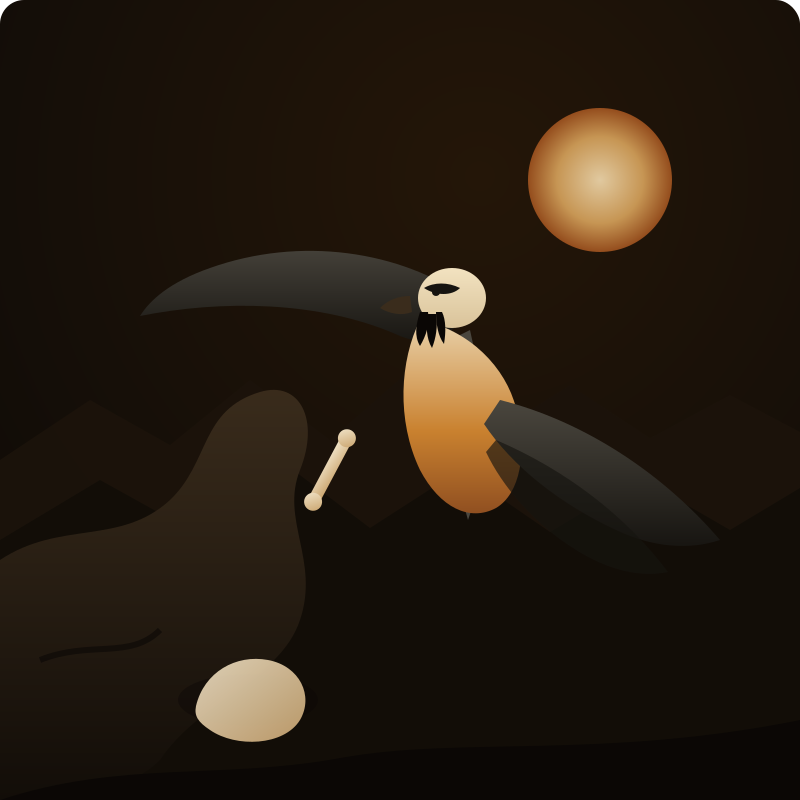
Meet the Bearded Vulture
Born bone-white, and rust by its own choosing.
A vulture of Eurasia's and East Africa's highest mountains, gliding on a wingspan built more like an albatross's than a typical raptor's, and living on a diet almost no other vertebrate can survive on: bone.
Everything this reading says about you rests on what the Bearded Vulture actually does: an adult that eats bone and marrow almost exclusively, a stomach acid strong enough to dissolve it, a plumage stained rust by the bird's own hand, and a patience that waits out every other scavenger before it moves. This chapter is that foundation. The rest of the page draws its meaning from these real traits.
The rock was never the point. What you finally get out of what lands on it is.
6 traits below
01of six
The chosen rock
Bones too large to swallow are carried in the vulture's talons, lifted 50 to 150 metres into the air, and dropped repeatedly onto rocky sites called ossuaries until they shatter, releasing the marrow inside.
You have a way of carrying the hardest thing you own back to the same trusted place and letting the fall, not your grip, do the part you cannot force by hand.
02of six
The stomach built for bone
An adult bearded vulture's stomach acid is strong enough to dissolve swallowed bone within about 24 hours.
What would sit undigested in almost anyone else, you have built the actual capacity to take in and finish, on your own schedule.
03of six
The self-made rust
The bird's pale, cream-colored plumage becomes its signature rust-orange only after it bathes in iron-rich mud and water, with individual birds varying in exactly how deep the stain runs.
The color people meet you by was never issued at birth. It is something you keep renewing yourself, on a schedule only you keep.
04of six
The waiting order
Bearded vultures typically wait for other scavengers to strip a carcass of meat before approaching, rarely competing for flesh, and specialize instead on what those animals leave behind.
You are rarely first to a thing everyone else is fighting over. You let the fight finish, then take the part that was never actually the point of contention.
05of six
The late nest
Bearded vultures reach breeding age slowly, at an average of 8.9 years old for males and 7.7 for females, and a pair holds several nests within one territory, rotating between them year to year.
You were never going to commit early. But once you do, you keep more than one place ready, and you go back to the ones that already worked.
06of six
The undiluted delivery
Unlike most vultures, bearded vulture parents deliver food to their chicks whole, without regurgitating it first.
What you decide to give someone, you tend to hand over exactly as you found it, without softening it into something easier to receive.