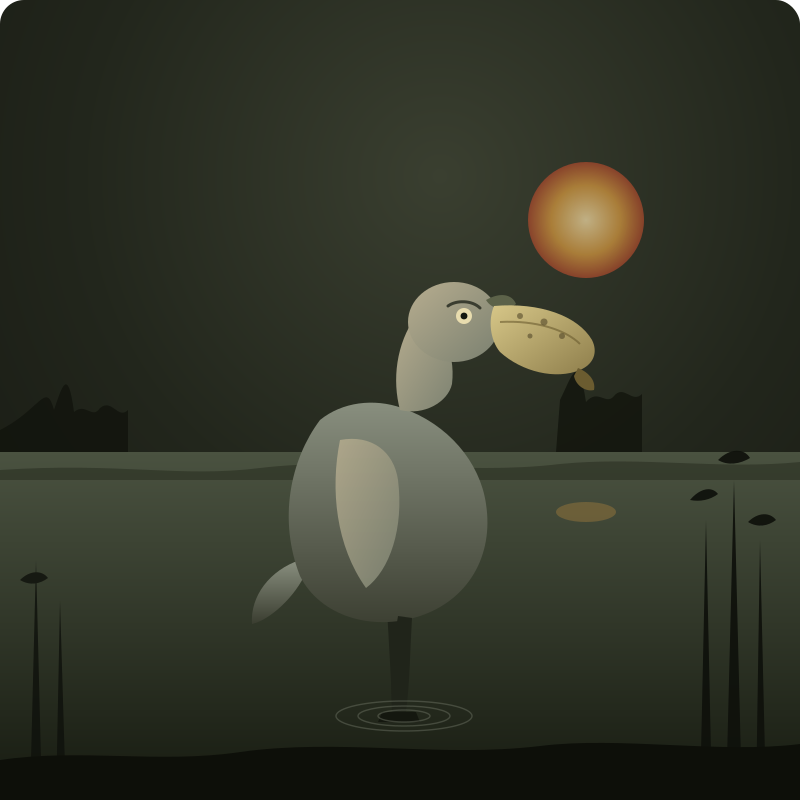
Meet the Shoebill
Africa's most patient hunter, and its strike is over before the water finishes moving.
A massive, prehistoric-looking wading bird of East Africa's papyrus swamps, famous for a stillness few predators can match and a stare that unsettles anyone who meets it.
Everything this reading says about you is grounded in what the Shoebill actually is: a solitary ambush hunter with a bill built to finish what patience starts, a bird that can hold one posture for hours and then move only once. This chapter is that foundation. The rest of the page draws its meaning from these real traits.
The stillness was never the absence of a plan. It was the plan, running the entire time.
6 traits below
01of six
The stillness itself
Shoebills hunt primarily by standing motionless over shallow water for extended periods, waiting for a lungfish, catfish, or other prey to surface for air before committing to any movement.
What looks like patience from the outside is, from where you sit, simply the only method that has ever actually worked. You are not waiting for something to happen. You are waiting for the one moment worth moving for.
02of six
The collapse
When prey is spotted, the Shoebill strikes with a sudden forward-and-down lunge of its head and neck, a motion so committed the bird overbalances and cannot immediately repeat it, needing to first regain its footing.
You get one real attempt before you have to reset completely. That is not a weakness you hide. It is the reason you refuse to move until you are already certain.
03of six
The stare that does not blink first
Researchers who have approached nesting Shoebills at close range report the bird shows no threat display and does not retreat; instead, it simply stares back, unmoving, for as long as the approach continues.
People expect a reaction from you and get a held gaze instead. Silence, in your case, is not confusion. It is you deciding what to do next.
04of six
Water thin on air
Shoebills favor poorly oxygenated water, where fish are forced to surface more often to breathe, and hunt most successfully in exactly the conditions other predators would avoid.
You do not need the easy conditions. You have learned to work the water everyone else avoids, because that is where the thing you are after eventually has to come up for air.
05of six
One nest, one bird that lives
A Shoebill pair usually lays two eggs, but by the end of the breeding season typically only one chick survives to fledge, most often due to sibling competition, predation, or food scarcity.
You have made peace with the fact that not everything you start with makes it to the end. What survives in you was not chosen at random. It was the one that held on.
06of six
The greeting that sounds like a warning
At the nest, Shoebills perform a rapid bill-clattering display, both between mated adults and from chicks toward parents, functioning as greeting and communication rather than threat.
What sounds, from outside, like a warning is often, from you, simply how you say hello. The people who stay learn to hear the difference.