Meet the Tuatara
So unhurried it is still growing decades past the age when most reptiles have finished.
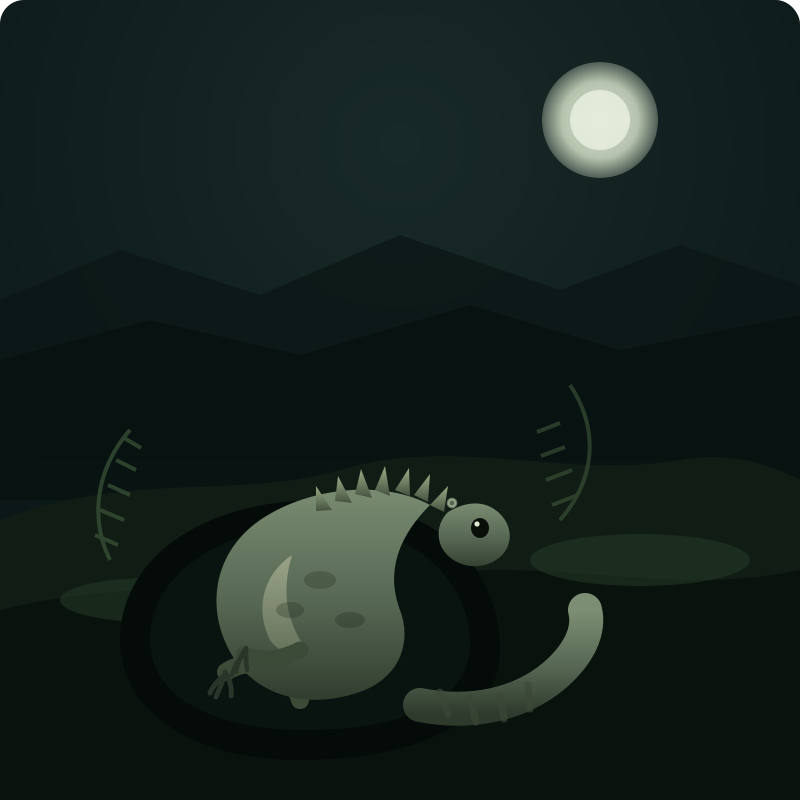
A grey-green reptile of New Zealand's wind-scoured offshore islands, the last living member of an order that has otherwise been gone for tens of millions of years.
Everything this reading says about you is grounded in what the Tuatara actually is: the sole survivor of a reptile lineage most of its relatives left behind, built to run colder and slower than almost anything sharing its burrow. This chapter is that foundation. The rest of the page draws its meaning from these real traits.
Nothing about the Tuatara was built for speed. Almost everything about it was built to still be here.
6 traits below
01of six
The lineage nothing else survived
The Tuatara is the sole living member of Rhynchocephalia, a reptile order that split from the lineage leading to modern lizards and snakes roughly 200 million years ago, with every other branch of that order gone by around 60 million years ago.
You come from whatever in you refused to end when the rest of your kind did.
02of six
The cold that doesn't slow you down
The Tuatara has the lowest preferred body temperature of any reptile, staying active at temperatures as low as 45°F (7°C) that would leave most other reptiles unable to move.
You keep functioning in conditions that quietly stop everyone else in the room.
03of six
The burn that never flares
Its metabolism runs far slower than that of other reptiles its size, and wild individuals are known to live well over 100 years.
What looks like a low flame in you is actually a fire that was never going to spend itself quickly.
04of six
The eye you closed on purpose
Hatchlings carry a functional parietal eye on top of the skull, with a lens and a light-sensing retina, which becomes covered by scale and skin as the animal reaches adulthood.
Something in you saw the light plainly once, before you were old enough to decide how much of that seeing you still wanted on display.
05of six
The clutch that outlasts most plans
Females lay a single clutch only once every two to five years, and the eggs then take twelve to fifteen months to hatch, the longest incubation period of any living reptile.
You do not treat starting something and finishing it as events that belong anywhere near the same year.
06of six
The crest that only rises for a reason
Males carry a fold of skin along the spine that can be raised into a visible crest during territorial or courtship display, and stays low the rest of the time.
Most of what you're capable of showing stays folded down until the room actually calls for it.