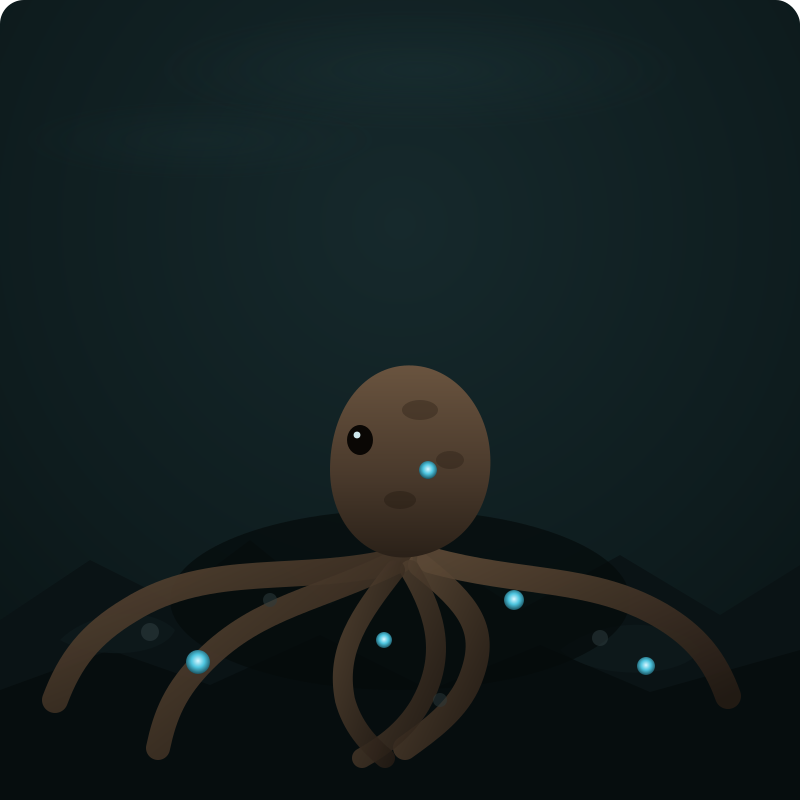
Meet the Blue-ringed Octopus
A palm-sized animal that stays unnoticed until the moment it decides not to be.
A palm-sized octopus of the tide pools and coral shallows of the Indo-Pacific, colored to disappear until the instant it chooses not to.
Everything this reading says about you is grounded in what the Blue-ringed Octopus actually is: an animal built to be overlooked, carrying a warning display it almost never has to use and a bite that needs no second effort. This chapter is that foundation. The rest of the page draws its meaning from these real traits.
The danger was never the problem. The showing of it is.
6 traits below
01of six
The camouflage
At rest, its skin changes color and texture to match the surrounding rock or coral, controlled by chromatophores that expand and contract on command from the nervous system.
Your first move in almost any room is not to arrive. It is to match the surface until nobody can find the seam.
02of six
The warning flash
The rings stay faint until the animal is handled or threatened, when they flash into brilliant iridescent blue as a rapid warning display, a signal researchers describe as aposematic.
What you show under real pressure is not panic. It is the one signal built to be believed on the first showing.
03of six
The bite you don't feel yet
Its saliva carries tetrodotoxin, a neurotoxin potent enough that a bite can go unnoticed at the moment it happens, and there is no antivenom.
You rarely make a show of the instant you have decided someone has gone too far. By the time it registers, the decision is already finished.
04of six
Small enough for a palm
An adult greater blue-ringed octopus can weigh as little as 10 to 100 grams and measure roughly 10 centimetres, small enough to sit in a palm, yet is regarded as one of the most venomous marine animals known.
Almost nothing about your size prepares people for what you are actually capable of holding.
05of six
Provoked, not hostile
Despite its reputation, the species is not aggressive and tends to hide or flee when disturbed; documented bites are almost always defensive, following handling.
People credit you with a temper you have almost never actually used.
06of six
One clutch, one ending
A female lays a single clutch of 60 to 100 eggs, broods them for around 50 days without eating, and dies shortly after they hatch.
Whatever you build, you tend to build once, completely, holding nothing back for after.