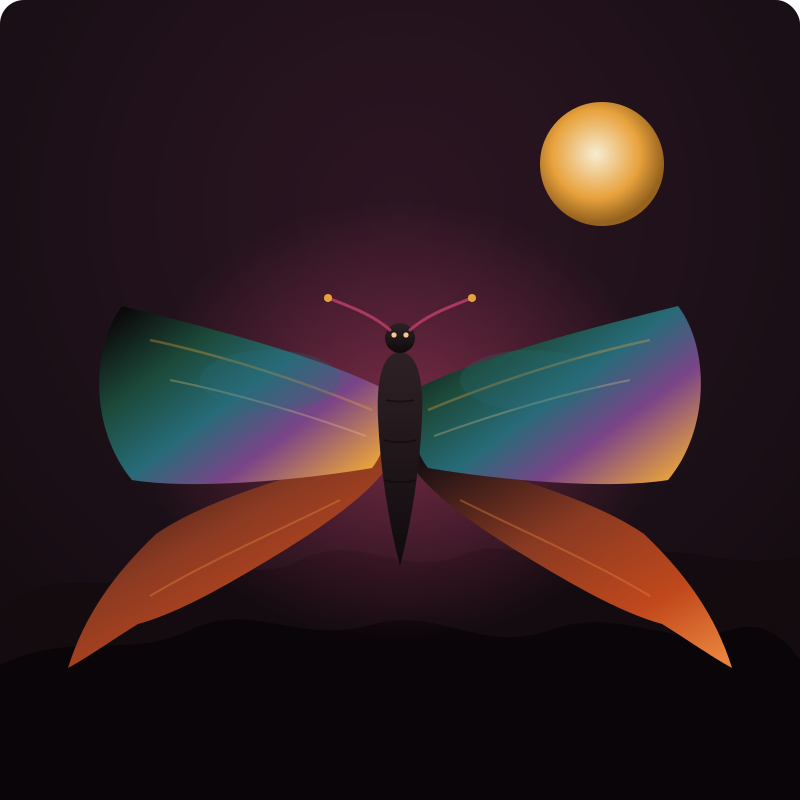
Meet the Sunset Moth
One of the world's most dazzling insects, and still mistaken for a butterfly.
A day-flying moth of Madagascar's eastern forests, wearing wings that shift color by the angle they're seen from.
Everything this reading says about you is grounded in what the Sunset Moth actually is: a moth that flies by day instead of night, wing scales that bend light into color rather than holding pigment, a caterpillar raised on a single toxic leaf, and a range confined to one island on Earth. This chapter is that foundation. The rest of the page draws its meaning from these real traits.
The color was never fake. The name is what keeps missing it.
6 traits below
01of six
The wrong family
Chrysiridia rhipheus is a moth, not a butterfly, classified in the family Uraniidae rather than any butterfly family, and it flies by day, which is the main reason it keeps being mistaken for the insect it only resembles.
You get filed under the nearest familiar word by people who stopped looking one detail too soon. What they missed was never a flaw in you. It was a gap in their attention.
02of six
A color with no pigment
The wing's shifting color comes from microscopic layers of cuticle and air inside each scale that bend and interfere with light rather than holding pigment, so the same patch of wing can read as a different color depending on the angle it's viewed from.
Two people can describe you differently and both be telling the truth. They aren't disagreeing about you. They are simply standing in different places.
03of six
Full daylight, no cover
Unlike most of its moth relatives, which fly at night, the Sunset Moth is diurnal, active and visible in full daylight rather than under cover of dark.
You don't save the real version of yourself for private hours. Whatever you actually are, you tend to show it while everyone is still watching.
04of six
One leaf, no substitute
The caterpillar feeds exclusively on plants in the genus Omphalea, a specific and toxic host with no dietary backup; if the leaf isn't there, nothing else will do.
You were built on one thing that actually sustained you, and you know almost instantly when something else is being offered in its place. Not everything that looks like food is food.
05of six
What the poison becomes
The toxins the caterpillar takes in from Omphalea are carried through the pupal stage into the adult moth, giving the fully grown, day-flying insect a chemical defense it never had to build from nothing.
Something that could have done you real harm early got absorbed instead, and stayed. What you were exposed to as a beginner is still working for you, quietly, as protection.
06of six
One island, nowhere else
Chrysiridia rhipheus is endemic to Madagascar and found nowhere else on Earth, though large numbers of adults move across the island itself as fresh growth becomes available.
You belong to exactly one point of origin. Everywhere else you go, you're visiting, not from there.