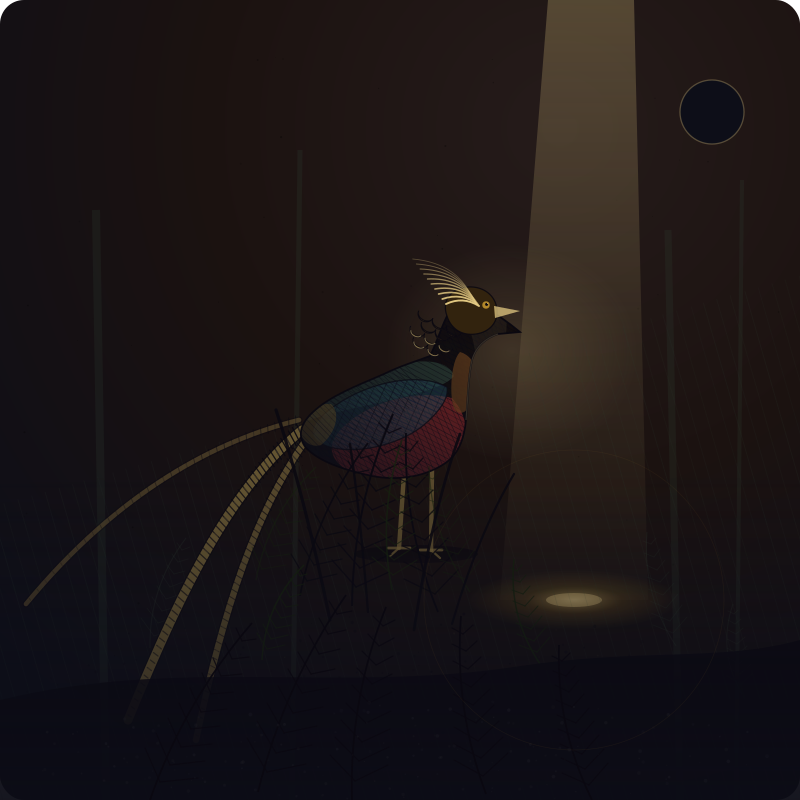
Meet the Golden Pheasant
The most spectacular bird in the forest, and the hardest one to see
A bird of central China's mountain forests, wearing gold, crimson and deep blue where nothing can see it.
Everything this reading says about you is grounded in what the Golden Pheasant actually is: a spectacular display carried through dense undergrowth, a cape that opens only when the bird decides, a body that would rather run than fly. This chapter is that foundation. The rest of the page draws meaning from these real traits.
The colors were never the problem. The clearing is.
6 traits below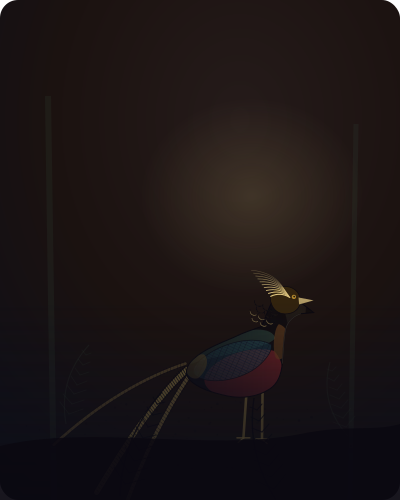
01of six
The cape
Behind the head sits a ruff of orange, black-edged feathers. In courtship the male raises it and rotates it forward until it screens his face, fanning the tail and circling the hen. The cape stays folded the rest of the time.
Your display is deliberate, not automatic. When it opens, everyone present understands they are being shown something you decided to show.
02of six
Hidden brilliance
The species is endemic to the forested mountains of central China, and despite the plumage it is secretive to the point of near-invisibility, keeping to dense undergrowth where it is rarely seen even where it is common.
Being conspicuous and being seen are two different things. You have solved for the first and quietly declined the second.
03of six
The tail
The adult male runs 90 to 105 centimetres long, and roughly two thirds of that is tail. Most of what the bird carries is not the part that eats, fights, or flies.
A great deal of what you carry has no practical function. It is beauty, and carrying it costs you, and you carry it anyway.
04of six
The plain hen
The female wears mottled brown, cryptic against leaf litter. One species, two answers to the same forest: one bird solved it by vanishing, the other by dazzling and then hiding.
Both instincts live in you. The brilliance and the camouflage are the same animal, and neither one is a mask over the other.
05of six
Runs, rarely flies
Golden pheasants are clumsy fliers that run from a disturbance rather than take off, feeding on the ground through the day.
Your first answer to threat is distance, taken quietly, on foot. You leave a situation before most people notice it turned.
06of six
Roosts high
The bird forages on the forest floor by day and climbs into the canopy to roost at night, sleeping above everything that walks.
You need a place with height and no traffic to end the day in. Without it, the watching never switches off.